Lead Qualification with AI Classifiers
Sales teams spend a significant portion of their day on leads that will never close. AI lead qualification changes that by using machine learning classifiers to sort every inbound contact by fit and buying intent before a rep ever picks up the phone. The result is a pipeline built from contacts who actually match what you sell.

What an AI Classifier Actually Does
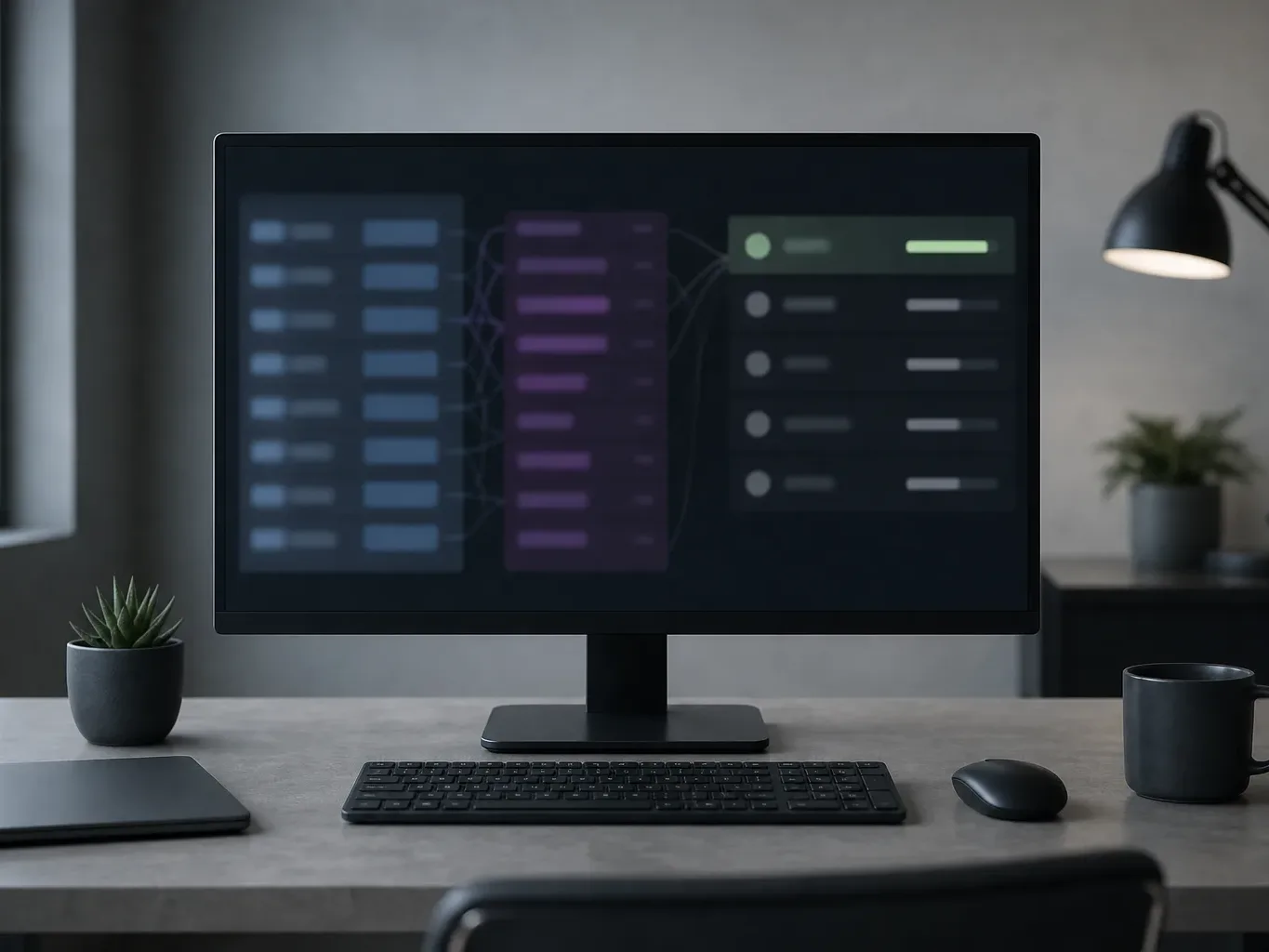
An AI classifier is a machine learning model that assigns input data to one or more predefined categories. In a lead qualification context, the inputs are signals about a contact: job title, company size, pages visited, form responses, email engagement history. The model maps those signals to categories such as "high intent," "nurture," or "disqualify."
Each classification comes with a confidence score, a probability value between 0 and 1 indicating how likely the input belongs to a given class. A score close to 1 for "sales-ready" tells a rep that the model is highly confident this contact fits the target profile. A score near 0 on that same class means the contact should route to a nurture sequence instead.
The classifier does not replace judgment. It processes hundreds of signals simultaneously and returns a consistent, auditable decision that a human rep can act on immediately.
Why Dedicated Classifiers Beat Manual Scoring
Traditional lead scoring uses a fixed point system. Marketing assigns 10 points for a whitepaper download, 20 for a demo request, and a threshold like 50 triggers a sales handoff. The logic is transparent but brittle. It cannot adapt when buyer behavior shifts, and it treats every signal with equal weight regardless of what the data actually shows.
A trained classifier learns the real relationship between signals and outcomes from historical closed-won and closed-lost data. It adjusts weightings automatically and handles interactions between signals. A VP-level contact who visited the pricing page twice in one week may score differently than a VP who only downloaded a brochure once, even if both actions carry the same manual point value.
Dedicated classifiers also run faster than prompting a large language model for the same decision. Most cloud-hosted text classifiers respond in under 100 milliseconds, which matters when you are qualifying thousands of leads per hour in real time.

How Lead Qualification Automation Works in Practice
Automation connects the classifier to your existing CRM and marketing stack. A new lead fills out a form. The event triggers an API call that sends contact attributes and behavioral data to the classifier. Within seconds, the model returns a category and a confidence score.
The CRM updates the lead record, assigns it to the correct queue, and triggers the appropriate sequence.
No rep manually reviews a low-confidence lead until the contact takes further action. High-confidence leads route to an account executive immediately. Borderline contacts enter an automated nurture track designed to generate more signal before a human gets involved.
This loop runs continuously. As contacts move through your funnel and take new actions, the classifier re-scores them. A contact who opened three emails and registered for a webinar can move from nurture to sales-ready overnight without anyone manually adjusting a score.

Building a Classifier for Your Sales Process
The classifier needs labeled training data to learn what a qualified lead looks like for your specific business. Most supervised text and structured-data classifiers require at least a few hundred labeled examples per class to achieve reliable performance. For lead qualification, that means pulling historical CRM records and tagging each contact as converted, lost, or disqualified.
A bespoke supervised classifier project, covering data labeling, model training, evaluation, and deployment, typically costs between $5,000 and $50,000 or more. The range reflects differences in data availability, model complexity, and the team doing the work. Businesses with clean CRM history and clear outcome tracking sit at the lower end. Those with fragmented data or complex multi-product sales motions need more investment.
Off-the-shelf scoring APIs offer a faster starting point. These run at roughly $0.50–$5.00 per 1,000 API calls depending on model size and input length. They are useful for validating the concept before committing to a custom build.

Choosing the Right Classification Approach
Two decisions shape your architecture: binary versus multi-class classification, and single-label versus multi-label output.
Binary vs. Multi-Class
Binary classification gives each lead one of two outcomes: qualified or not qualified. It is the simplest setup and works well when your sales process has a single handoff point. Multi-class classification assigns each lead exactly one label from three or more categories, such as "hot," "warm," "cold," or "disqualify." This approach gives ops teams more routing granularity without requiring separate models.
Single-Label vs. Multi-Label
Multi-label classification allows a single lead to receive two or more labels simultaneously. A contact could be tagged as both "enterprise fit" and "cross-sell opportunity" at the same time. This suits businesses with complex product lines where a lead might qualify for multiple offerings independently. Most early-stage qualification programs start with multi-class single-label output and move to multi-label as the model matures.

Setting and Tuning Your Confidence Threshold
The threshold is the confidence score cutoff above which the classifier commits to a positive prediction. The default is commonly 0.5, but 0.5 is rarely the optimal value for a sales workflow. Lowering the threshold passes more leads to sales, increasing volume but also increasing the share of weak leads reps waste time on. Raising it keeps the pipeline lean but risks missing genuinely interested contacts.
The right threshold depends on your cost structure. If rep time is expensive and leads are plentiful, a tighter threshold makes sense. If your lead volume is low and every conversation matters, a looser threshold preserves opportunities. Review threshold performance monthly using win rate, time-to-close, and rep feedback as guide metrics.
Data Quality and Compliance
A classifier is only as good as the data flowing into it. Incomplete CRM records, inconsistent field naming, and stale contact data all degrade accuracy. Modern AI spam classifiers hit 95–99% accuracy on clean benchmark datasets, but real-world lead data is messier. Expect to invest in data hygiene before and during classifier deployment.
Privacy regulations add another layer. Any system that automatically categorizes individuals for commercial follow-up must comply with applicable data protection law. The EU AI Act, in force from 2024 with phased obligations running through 2027, designates certain AI classification systems as high-risk and requires conformity assessments and human oversight. Check your legal exposure before fully automating handoff decisions without a human review step.
Building a human-review queue for edge cases is not a workaround. It is a best practice that improves model accuracy over time by feeding real-world corrections back into training data.
Frequently Asked Questions
What Is Lead Qualification Scoring?
Lead qualification scoring is the process of assigning a value to each inbound lead based on how closely they match your ideal customer profile and how likely they are to buy. Traditional systems use fixed point rules, while AI classifiers learn from historical closed-won and closed-lost data to weight signals automatically and produce a confidence score between 0 and 1 for each lead category.
How Does Lead Qualification Automation Work?
Lead qualification automation connects an AI classifier to your CRM and marketing tools. When a new lead submits a form or takes a trackable action, the system sends their data to the classifier via API, receives a category and confidence score in return, and automatically routes the lead to the right queue or sequence without manual review. The process typically completes in under 100 milliseconds for cloud-hosted classifiers.
How Much Data Do I Need to Train an AI Lead Qualification Classifier?
Most supervised classifiers need at least a few hundred labeled examples per class to reach reliable performance. For lead qualification, that means pulling historical CRM records and tagging each contact as converted, lost, or disqualified. Businesses with clean outcome tracking can often build a working model from 12 to 24 months of historical data.
What Confidence Threshold Should I Use for Sales Handoffs?
The default threshold for most classifiers is 0.5, but that is rarely optimal for a sales workflow. If rep time is expensive and lead volume is high, raising the threshold keeps the pipeline lean. If lead volume is low and every conversation matters, a lower threshold avoids missing interested contacts. Review threshold performance monthly against win rate and rep feedback.
Are There Compliance Risks with Automating Lead Qualification Decisions?
Yes. Any AI system that automatically categorizes individuals for commercial follow-up must comply with applicable data protection law. The EU AI Act, phased in from 2024 through 2027, designates certain AI classification systems as high-risk and requires conformity assessments and human oversight. Building a human-review queue for edge cases is a best practice that also helps improve the model over time.