Sentiment Analysis Classifiers for Customer Feedback
What They Are and Why They Matter
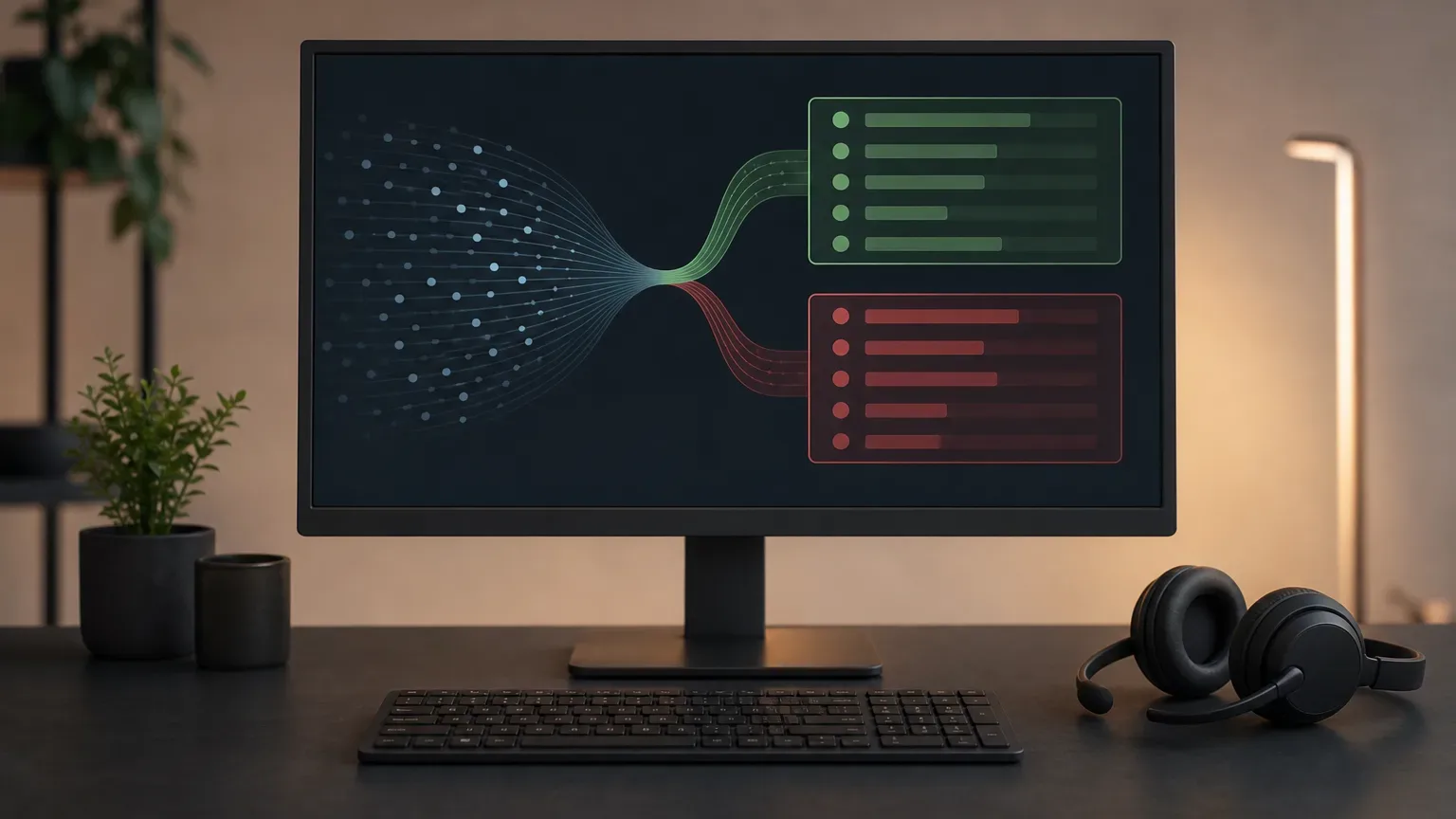
A sentiment analysis classifier is a machine learning model that reads customer-written text, such as a review, a support ticket, or a survey response, and assigns it to a predefined category: positive, negative, or neutral. At scale, this replaces the slow and inconsistent process of having people manually read through thousands of comments. A retail brand receiving 50,000 post-purchase reviews a month cannot rely on human readers alone to spot patterns quickly enough to act on them.
The output of each classification is a confidence score, a probability value between 0 and 1 indicating how likely the input belongs to a given class. A score close to 1 signals high certainty; a score near 0 signals the model is confident the label does not apply. Teams use a threshold, a cutoff commonly set at 0.5 by default, to decide when the model commits to a positive prediction, though 0.5 is rarely the optimal setting for every use case.

How a Sentiment Classifier Reads Customer Text
Turning Words Into a Verdict
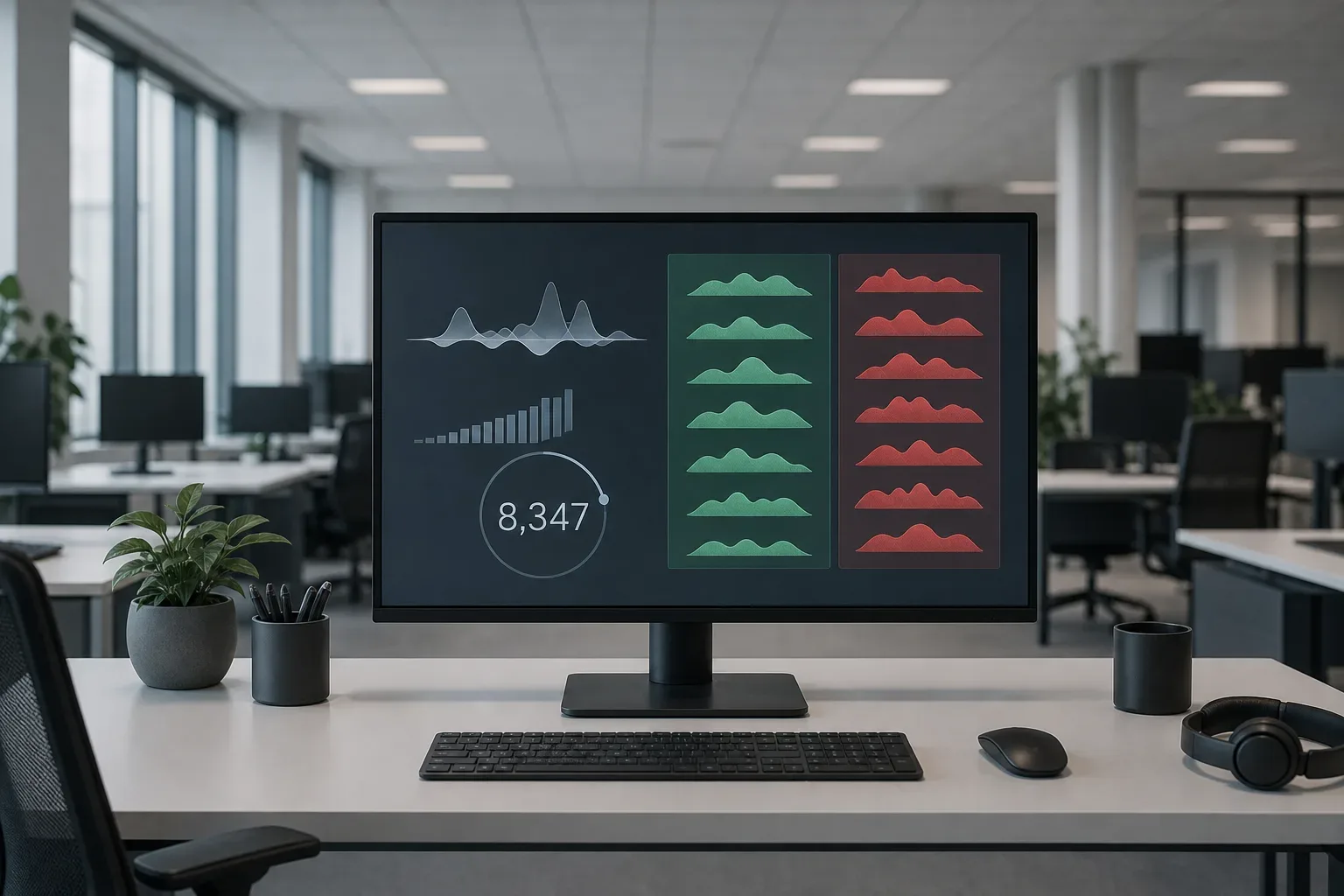
During training, the model is shown hundreds or thousands of labeled examples: reviews marked positive or negative by human annotators. It learns which words, phrases, and sentence structures correlate with each label. At inference time, a new piece of text is processed and a confidence score is produced for each class.
Most cloud-hosted text classifiers return a result in under 100 milliseconds at standard input lengths, fast enough to feed live dashboards or trigger real-time alerts. That speed matters when a product team wants to know within minutes of a social media spike whether customer sentiment is turning negative.
Fine-Grained vs. Binary Models
A binary model splits text into two buckets: positive or negative. A multi-class model, where each input receives exactly one label from three or more possible classes, might cover positive, neutral, negative, and escalation-required. Some setups use multi-label classification, where a single input can receive two or more labels simultaneously, for example tagging a review as both negative and containing a delivery complaint. Choosing between these approaches depends on how many distinct action types your team actually needs to respond to.

Practical Applications in Customer Feedback
Product Reviews and Star-Rating Validation
Customers sometimes leave a five-star rating alongside a complaint-filled review. A sentiment classifier catches that mismatch by reading the written text directly, giving quality teams a more accurate picture than aggregated star averages alone. When a specific product line starts generating a rising share of negative-labeled reviews, the classifier flags it before the average star rating drops enough to be noticeable.
Support Ticket Triage
Incoming support tickets vary widely in urgency. A classifier trained on historical ticket data can route angry or distressed messages to senior agents immediately, while routine inquiries follow the standard queue. This reduces average response times for the customers who need fast help most, and it does so without requiring a human to read every message before routing it.
Survey and NPS Response Analysis
Net Promoter Score surveys collect open-ended comments alongside numerical scores. Manually reading through thousands of verbatim responses is time-consuming, and important themes get missed. A sentiment classifier processes the full response volume and surfaces emerging complaints, such as a spike in comments about a recently changed checkout process, within hours of the survey closing.
Accuracy, Limitations, and How to Calibrate Expectations
What the Benchmarks Say
Modern AI sentiment classifiers commonly report 95–99% accuracy on benchmark datasets. Real-world accuracy depends on how closely your customer language matches the training data. A classifier trained on hotel reviews will perform worse on software support tickets unless it has been fine-tuned on similar text. Data freshness matters too: slang, product names, and complaint patterns evolve, and a model trained two years ago may drift without retraining.
Where Classifiers Struggle
Sarcasm, mixed sentiment within a single sentence, and domain-specific language are consistent weak points. A customer writing "Oh great, another delay" is being sarcastic, but many classifiers read "great" as a positive signal. Short messages with little context, such as "As expected," can be ambiguous to any model. Human review remains necessary for high-stakes decisions, particularly those that affect individual customers rather than aggregate reporting.
Threshold Tuning
The default threshold of 0.5 treats the decision boundary symmetrically. In practice, a support team may prefer to accept a higher volume of false positives, catching a few neutral messages in the negative bucket, rather than miss genuinely upset customers. Adjusting the threshold down to 0.3 or 0.4 for the negative class increases recall at the cost of precision. Small threshold experiments on a validation set before going live can prevent costly miscalibration in production.
Build, Buy, or Use an API
Off-the-Shelf APIs
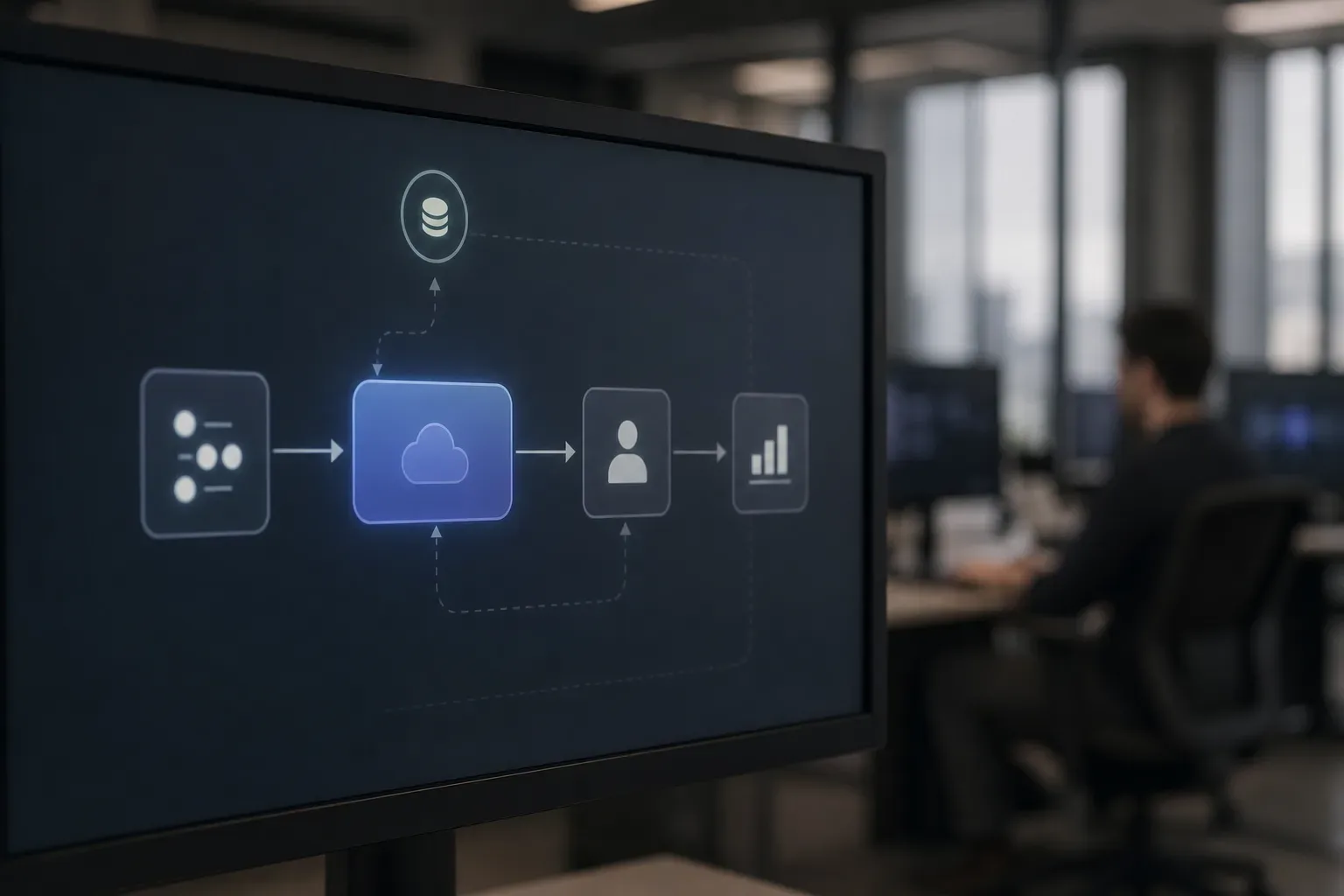
Managed classifier APIs typically cost $0.50–$5.00 per 1,000 calls, depending on model size, provider, and input length. For companies processing moderate feedback volumes, an API is the fastest path to a working pipeline with no model training required. The trade-off is that a general-purpose model may not handle your specific product language or industry terminology as accurately as a fine-tuned model would.
Custom Trained Models
Building a bespoke supervised classifier, covering data labeling, training, evaluation, and deployment, typically runs $5,000–$50,000 or more. That wide range reflects how much variation exists in data availability, task complexity, and team location. Companies with large volumes of already-labeled historical tickets or reviews are better positioned to justify the investment, because the labeling cost, often the largest single line item, is reduced.
Classifiers vs. Large Language Models
A dedicated classifier is generally faster and cheaper to run at scale than prompting a large language model for the same binary or multi-class decision. Running a lightweight classification model typically costs an order of magnitude less per inference than an equivalent LLM API call. LLMs offer flexibility classifiers lack, particularly for nuanced or zero-shot tasks, but for high-volume, well-defined sentiment decisions, a dedicated classifier almost always wins on cost and latency.
Getting Started with Your First Feedback Pipeline
Start by exporting a sample of 500–1,000 recent customer comments and manually labeling them as positive, neutral, or negative. Most supervised text classifiers need at least a few hundred labeled examples per class to achieve reliable performance, so this step is not optional. Use that labeled set both to fine-tune or evaluate a candidate model and to establish a baseline accuracy you can measure against over time.
Connect your classifier to a single feedback source first, such as post-purchase email surveys, before expanding to social mentions or live chat. Instrument the pipeline to log confidence scores alongside predictions so you can audit low-confidence outputs and identify where the model is uncertain. A well-monitored classifier, even a simple one, gives customer experience teams far more actionable signal than unread spreadsheets of raw comments.
Frequently Asked Questions
What Is Sentiment Analysis for Customer Feedback?
Sentiment analysis for customer feedback is the process of using a machine learning classifier to read text, such as reviews, support tickets, or survey responses, and assign it a label like positive, negative, or neutral. The model outputs a confidence score between 0 and 1 for each class, letting teams automatically sort and prioritize large volumes of feedback without manual reading.
How Accurate Are Sentiment Classifiers on Real Customer Data?
Modern AI sentiment classifiers commonly report 95–99% accuracy on benchmark datasets, but real-world accuracy depends on how closely your customer language matches the training data. A model trained on hotel reviews will perform less accurately on software support tickets unless it has been fine-tuned on similar text. Regular retraining keeps performance from drifting as language and product terminology change.
What Is a Confidence Score in Sentiment Analysis?
A confidence score is a probability value between 0 and 1 output by the classifier indicating how likely a piece of text belongs to a given class. A score close to 1 signals high certainty; a score near 0 means the model is confident that label does not apply. Teams use a threshold, commonly 0.5 by default, to decide when the model commits to a prediction, though tuning that cutoff for your specific use case improves accuracy.
Should I Use a Sentiment API or Train a Custom Model?
Managed sentiment APIs cost roughly $0.50–$5.00 per 1,000 calls and require no training, making them the fastest starting point for most teams. Custom trained classifiers, which typically cost $5,000–$50,000 or more, make sense when your feedback language is highly specialized or when off-the-shelf accuracy falls short after testing. Many teams begin with an API and only invest in custom training once they have enough labeled data to justify it.
How Many Labeled Examples Do I Need to Train a Sentiment Classifier?
Most supervised text classifiers need at least a few hundred labeled examples per class to achieve reliable performance. That means if you are classifying positive, neutral, and negative, you should aim for several hundred examples of each before training. Zero-shot and few-shot models built on large language models can work with fewer examples, but they are typically slower and more expensive to run at scale than a dedicated classifier.