Detecting Churn Risk in Customer Messages - Churn Prediction AI Guide

Why Customers Leave Before You Know They're Gone
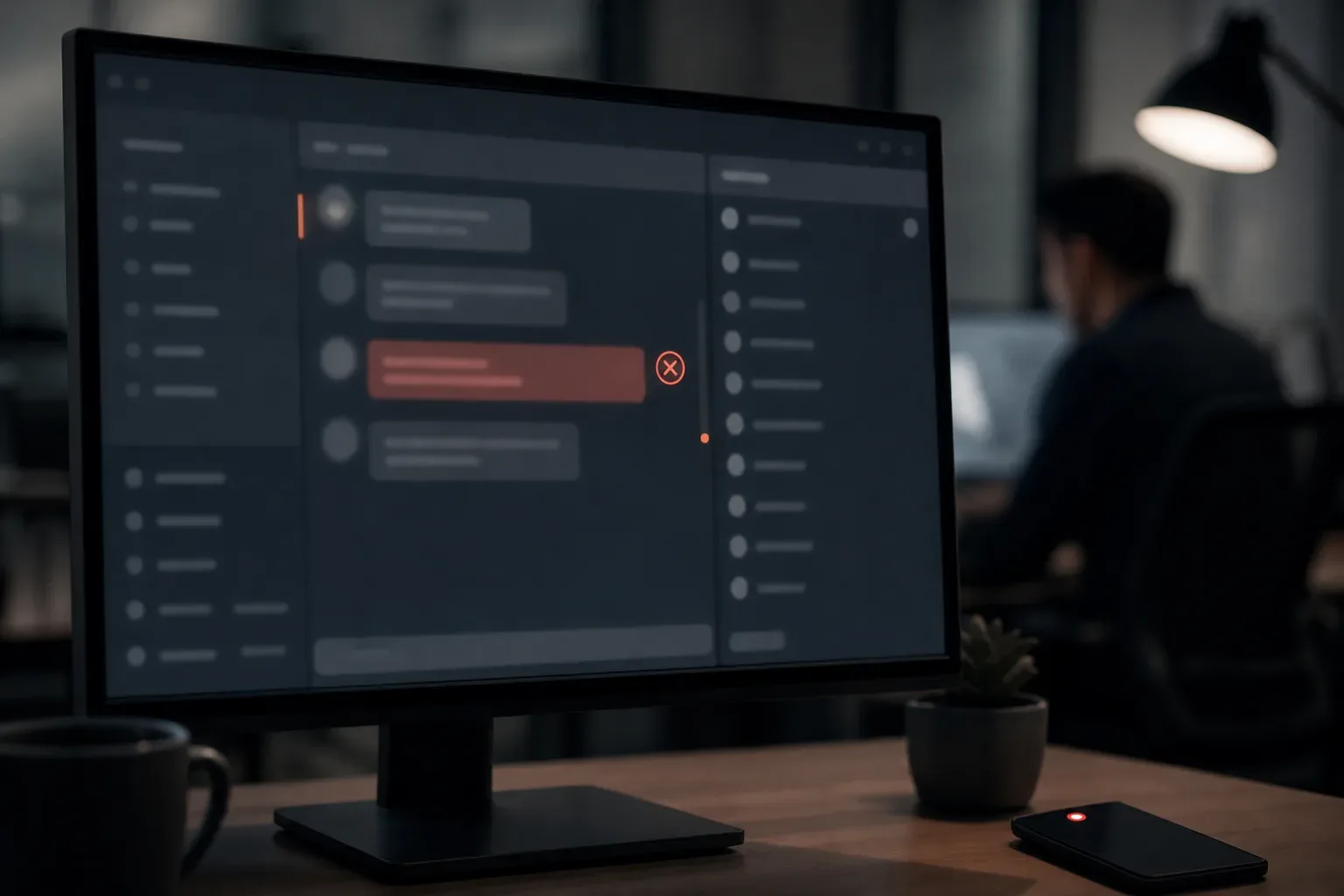
Most customers don't announce they're leaving. They send a frustrated support ticket, write a clipped reply to an email, or stop responding entirely. By the time a cancellation lands in your CRM, the decision is already made. Churn prediction AI changes that timeline by reading the signals inside those messages before a customer walks out.
A churn classifier is a machine learning model that assigns incoming customer messages to predefined categories, specifically "at-risk" or "not at-risk," based on patterns in the text. It doesn't rely on a single keyword. It weighs combinations of tone, word choice, complaint history, and context to produce a confidence score: a probability value between 0 and 1 indicating how likely it is that a given message reflects a customer who may leave.
What Signals Indicate Churn Risk
Certain language patterns consistently appear before cancellations. Phrases comparing your product unfavorably to a competitor, expressions of repeated frustration ("this is the third time"), and questions about contract terms or cancellation fees all correlate with elevated churn risk. Passive language like "I'll figure it out myself" can signal disengagement just as clearly as an explicit complaint.
Classifiers trained on historical churn data learn these patterns from thousands of real examples. A team labeling past tickets as "churned within 30 days" or "retained" gives the model the supervised signal it needs. Most supervised text classifiers require at least a few hundred labeled examples per class to achieve reliable performance, though zero-shot and few-shot approaches powered by large language models can operate with fewer labeled samples.
Tone and Sentiment vs. Explicit Complaints
Sentiment alone is a blunt instrument. A customer can be positive overall but still include one sentence that signals risk. Dedicated churn classifiers are trained to isolate those sentences rather than averaging sentiment across an entire message. That specificity makes them more actionable than a general-purpose sentiment score.
Explicit complaints are easier to catch, but they're also the latest signal in the chain. Catching the subtler tonal shift earlier, when a customer moves from engaged to indifferent, gives your retention team more time to respond.

How a Classifier Processes a Support Message
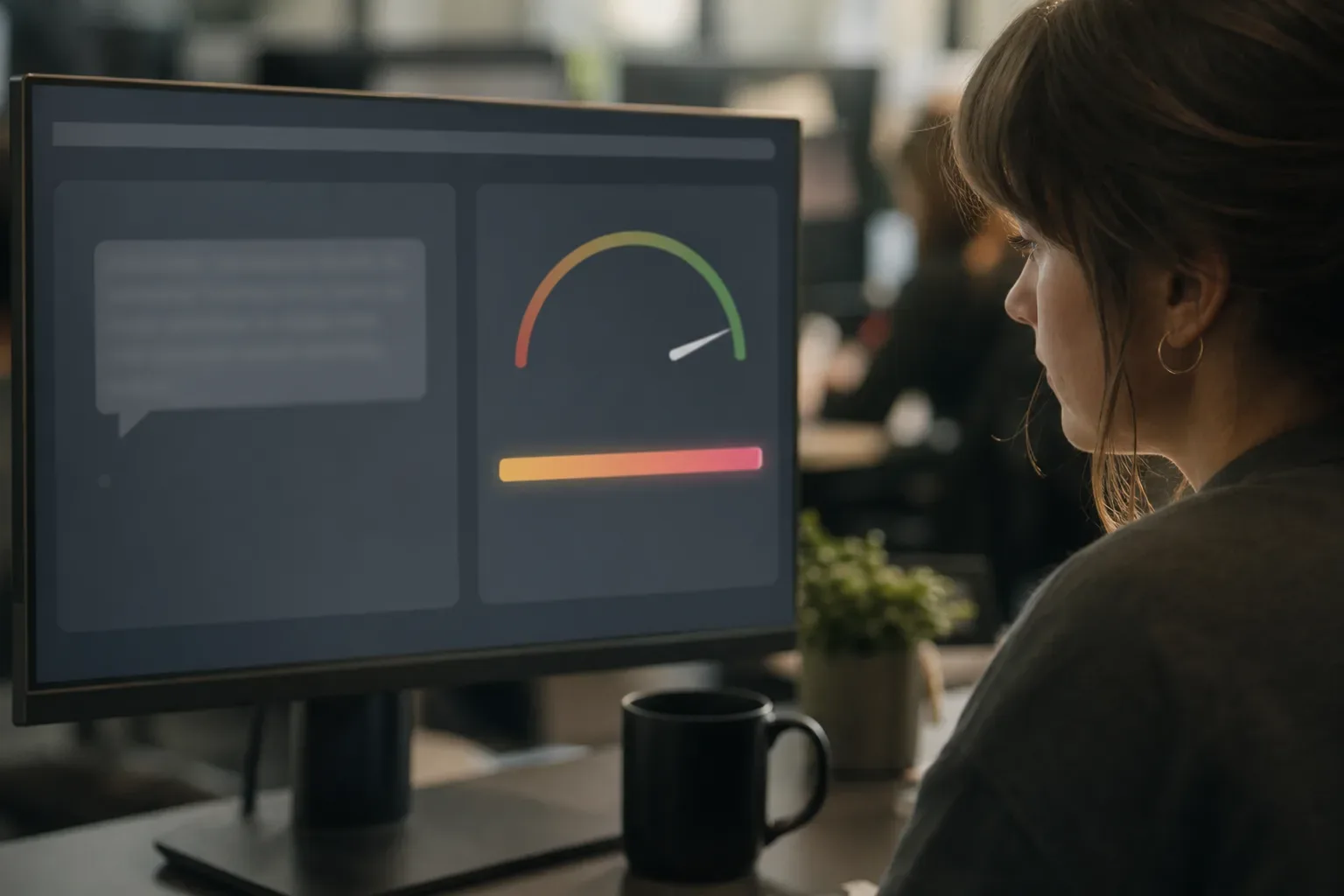
When a message arrives, the classifier converts the text into a numerical representation and runs it through a trained model. The output is a confidence score between 0 and 1. A score close to 1 means the model considers the message a strong indicator of churn risk; a score close to 0 suggests the customer is stable.
Cloud-hosted text classifiers typically respond at standard input lengths in well under a second, which means the score is ready before an agent opens the ticket. The default decision threshold sits at 0.5: messages scoring above that value are flagged as at-risk. Threshold tuning matters here. The default of 0.5 is a starting point, not always the optimal setting.
Raising it focuses human attention on only the clearest signals; lowering it casts a wider net at the cost of more false positives.
Routing and Prioritization in Practice
Once a message is flagged, the classifier's output can trigger an automated workflow. High-confidence at-risk tickets get routed to a senior retention agent rather than a general support queue. Lower-scoring messages can be grouped and reviewed in batches at a scheduled time, so the team's attention stays proportional to actual risk.
This kind of tiered routing is especially useful for teams handling high message volumes. A classifier running on every inbound message ensures that no at-risk signal slips through because of queue depth or shift coverage.
Training a Churn Classifier on Your Own Data
Off-the-shelf churn models exist, but they're trained on generic data. A model trained on your customers' specific language, your product category, and your support history will outperform a generic one on your use case. Building a bespoke supervised classifier, covering data labeling, training, evaluation, and deployment, typically costs between $5,000 and $50,000 or more, depending on data availability, complexity, and team location.
The labeling step is where domain expertise pays off. Labelers need to understand which customer behaviors actually preceded churn in your business, not just which messages sound frustrated. A product cancellation in month one looks different from a power user complaining about a missing feature, even if both messages carry a negative tone.
Using Managed APIs as a Starting Point
Managed classifier APIs let teams test churn detection without a full training project. Indicative costs run roughly $0.50–$5.00 per 1,000 API calls, depending on model size, provider, and input length. That's a practical entry point for validating whether the signal exists in your message data before committing to a custom build.
The trade-off is that a managed model may not recognize your industry's specific terminology or the nuances of your customer base. Treat managed APIs as a diagnostic tool, then invest in custom training once you've confirmed the use case.
Multi-Label Classification for Richer Signals
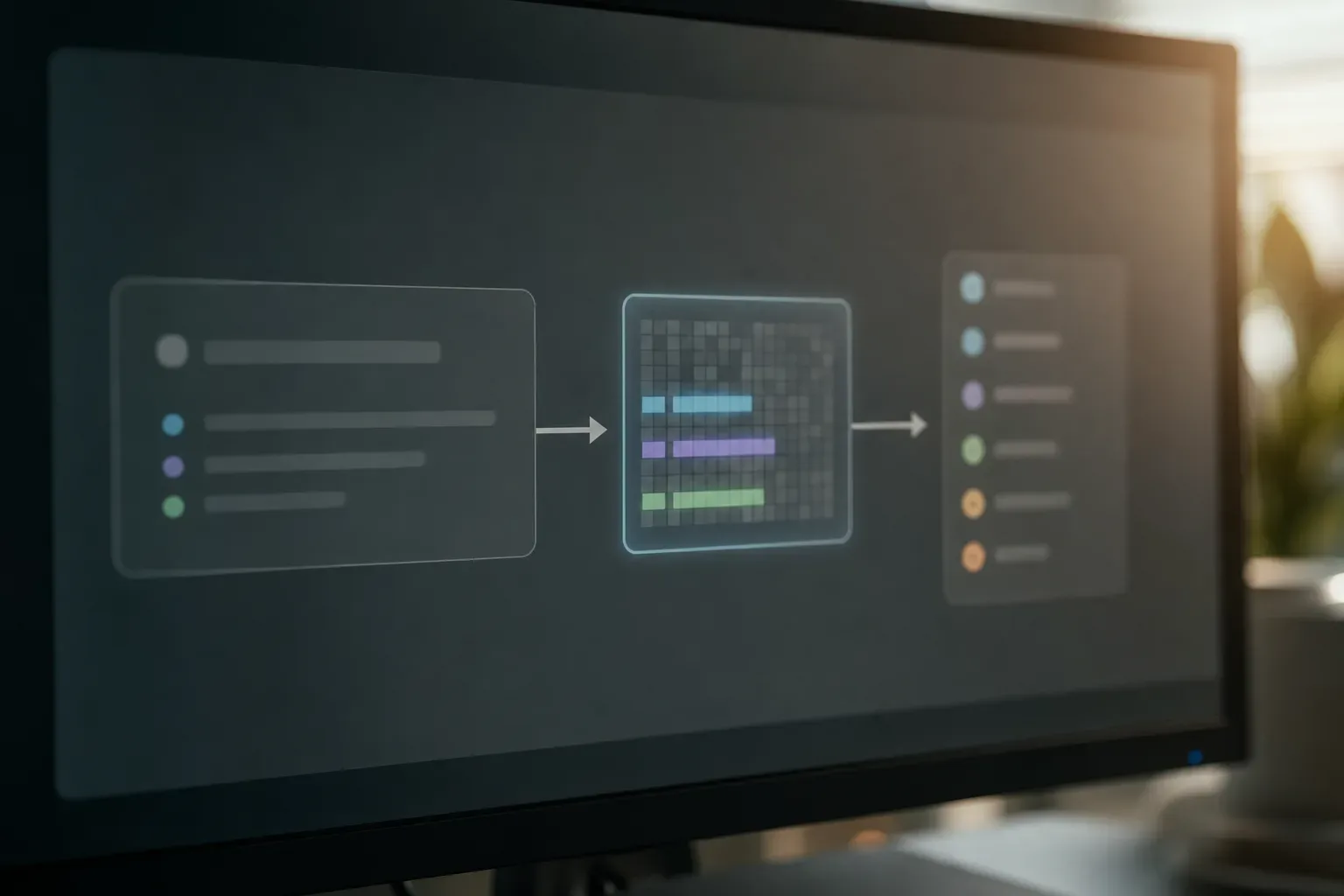
Churn risk rarely travels alone. A single message might simultaneously indicate billing frustration, a product usability complaint, and a competitor comparison. Multi-label classification assigns two or more labels to a single input at once, which is different from multi-class classification, where each message receives exactly one label from several options.
Using multi-label output, a support platform can tag a message as both "churn-risk" and "billing-issue," routing it to both the retention team and the billing specialist. That overlap information is often more useful than a single binary flag. It also gives product teams richer signal about which problem categories are driving churn across the customer base.

Classifier vs. LLM for Churn Detection
Large language models can assess churn risk, but they're slower and more expensive to run at scale than a dedicated classifier. A lightweight classification model typically costs an order of magnitude less per inference than an equivalent LLM API call. For a team processing thousands of support messages daily, that gap compounds quickly.
The architectural trade-off is flexibility vs. efficiency. An LLM can reason about novel, ambiguous situations it has never seen before. A dedicated classifier is faster, cheaper, and more consistent on the specific task it was trained for, but it won't adapt on its own to new language patterns without retraining. Most production systems use a classifier as the first-pass filter and escalate genuinely ambiguous cases to a human or a more capable model.

Compliance and Transparency Considerations
Customer messages contain personal data. Running them through a classifier, especially a third-party API, triggers data handling obligations under GDPR, CCPA, and sector-specific regulations. AI PII classifiers can identify common personal data types such as names, emails, phone numbers, and national ID numbers, but they should be combined with rule-based patterns for regulatory compliance. Human audit remains necessary for high-stakes decisions.
The EU AI Act, in force from 2024 with phased obligations running through 2027, designates certain AI classification systems as high-risk and requires conformity assessments and human oversight. Whether a churn classifier falls into that category depends on how its output is used. Systems that automatically trigger account actions without human review warrant closer scrutiny than those that simply prioritize a support queue. Verify current compliance deadlines with legal counsel before deployment.
Frequently Asked Questions
What Is Churn Prediction AI and How Does It Work on Customer Messages?
Churn prediction AI is a machine learning classifier that reads incoming customer messages, such as support tickets or emails, and assigns a confidence score between 0 and 1 indicating how likely the sender is to cancel or disengage. The model is trained on historical examples of messages sent by customers who later churned versus those who stayed, learning patterns in tone, word choice, and complaint type. When a new message arrives, the classifier scores it in real time and flags high-risk contacts for priority outreach.
Customer Churn Prediction - How Accurate Are AI Classifiers?
Accuracy depends heavily on the quality and volume of your training data. Most supervised text classifiers require at least a few hundred labeled examples per class to achieve reliable performance, and a model trained on your own customer language will outperform a generic one. Modern AI classifiers commonly reach 95–99% accuracy on benchmark datasets, but real-world performance depends on domain specificity, how current the training data is, and how the decision threshold is set. A threshold of 0.5 is the default starting point, not necessarily the optimal one for your use case.
Detecting Spam Messages with AI - Is It the Same Technology as Churn Detection?
Both spam detection and churn detection use text classifiers, but they're trained for different tasks. A spam classifier assigns messages to categories like 'spam' or 'not spam' based on structural patterns, sender reputation, and known spam phrases. Modern AI spam classifiers commonly report 95–99% accuracy on benchmark datasets. A churn classifier, by contrast, is trained on subtle signals inside legitimate customer messages, such as frustration, competitor comparisons, or disengagement cues, which require a different labeled dataset and often a different model architecture.
How Much Does It Cost to Build a Churn Prediction Classifier?
A bespoke supervised churn classifier, covering data labeling, training, evaluation, and deployment, typically costs between $5,000 and $50,000 or more, depending on data availability, complexity, and team location. Teams that want to test the concept first can use managed classifier APIs, which run roughly $0.50–$5.00 per 1,000 API calls depending on model size, provider, and input length. Starting with a managed API to validate the signal before committing to a custom build is a practical approach for most organizations.
What Compliance Rules Apply to Running Customer Messages Through an AI Classifier?
Customer messages contain personal data, so processing them through a classifier triggers obligations under GDPR, CCPA, and sector-specific regulations. AI PII classifiers can identify common personal data types such as names, emails, and phone numbers, but should be paired with rule-based patterns for full regulatory compliance, and human audit is still required for high-stakes decisions. The EU AI Act, in force from 2024 with phased obligations through 2027, designates certain AI classification systems as high-risk and mandates conformity assessments and human oversight. Verify current deadlines with legal counsel before deploying any automated churn decision system.